Most people only think about oral care when there's pain or discomfort.
Over the years, through my own experiences, experiments, observations, and research around this topic, I began looking at oral care from a different perspective. Much of what inspired me came from the holistic and natural living teachings of Healer Baskar, alongside my own curiosity and personal journey.
Just like many other health topics, I personally feel oral care has also become something heavily conditioned by modern habits, routines, and social norms. This article is not written from a medical or professional background, but rather from lived experience, reflection, and personal experimentation.
Take what resonates with you.
Oral Care Isn't Just About Brushing
When I was younger, I never really questioned the purpose of brushing teeth. We're taught: wake up, brush teeth and start the day.
If brushing is meant to clean the mouth, how long do we actually stay “clean” afterwards? Most people brush in the morning and begin eating or drinking again within 30 minutes. From breakfast until night, the mouth constantly goes through food and drinks.
Personally, for many years growing up, I would brush in the morning… then continue eating throughout the entire day… and finally sleep without cleaning my mouth properly before bed.
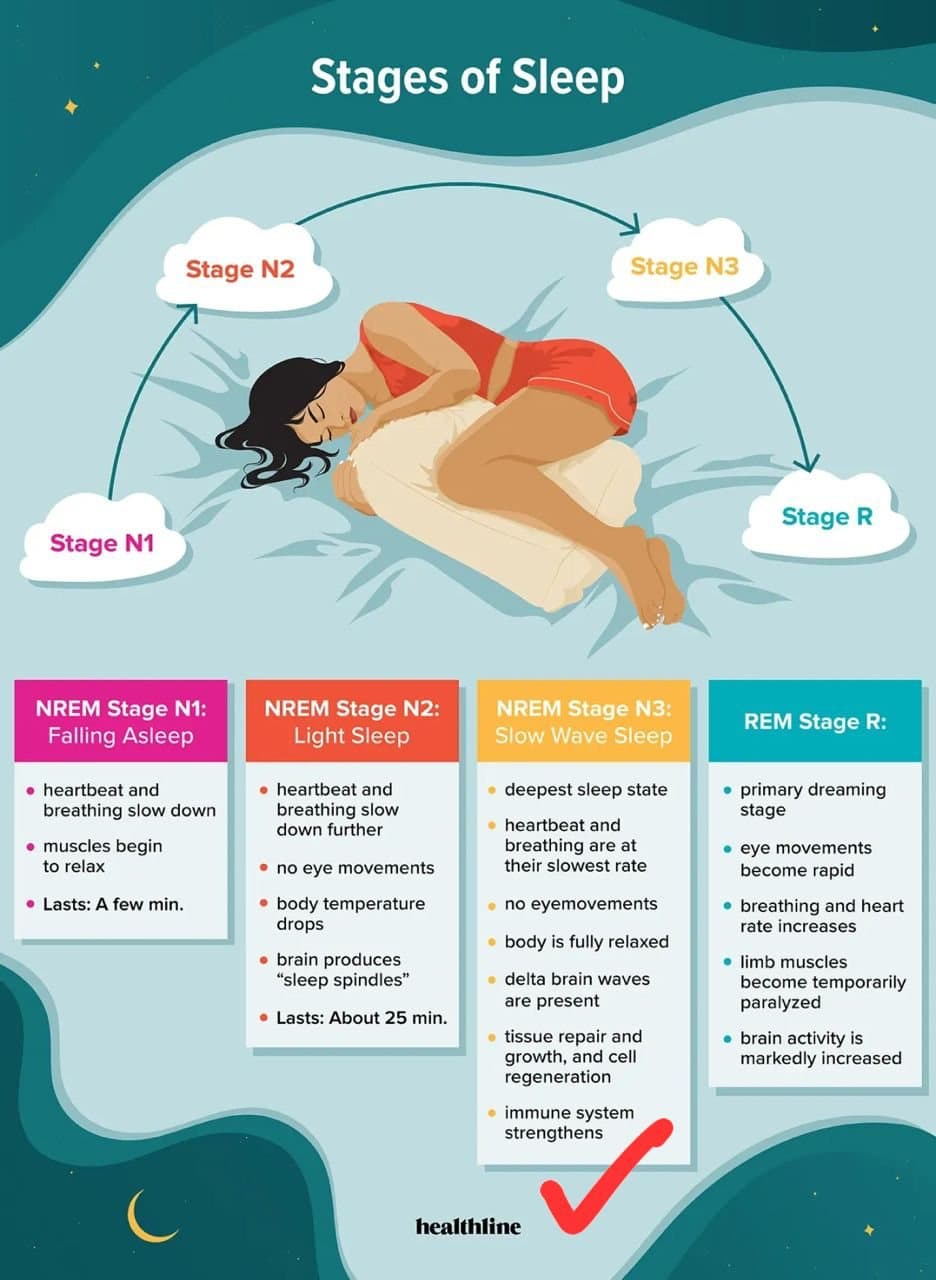
During sleep, the mouth stays closed for many hours with very little movement or airflow. Food particles stuck between the teeth and gums begin decomposing over time, and this stagnation may contribute to bad breath and oral problems.
This made me realise something: maybe brushing before sleep is actually more important than brushing in the morning.
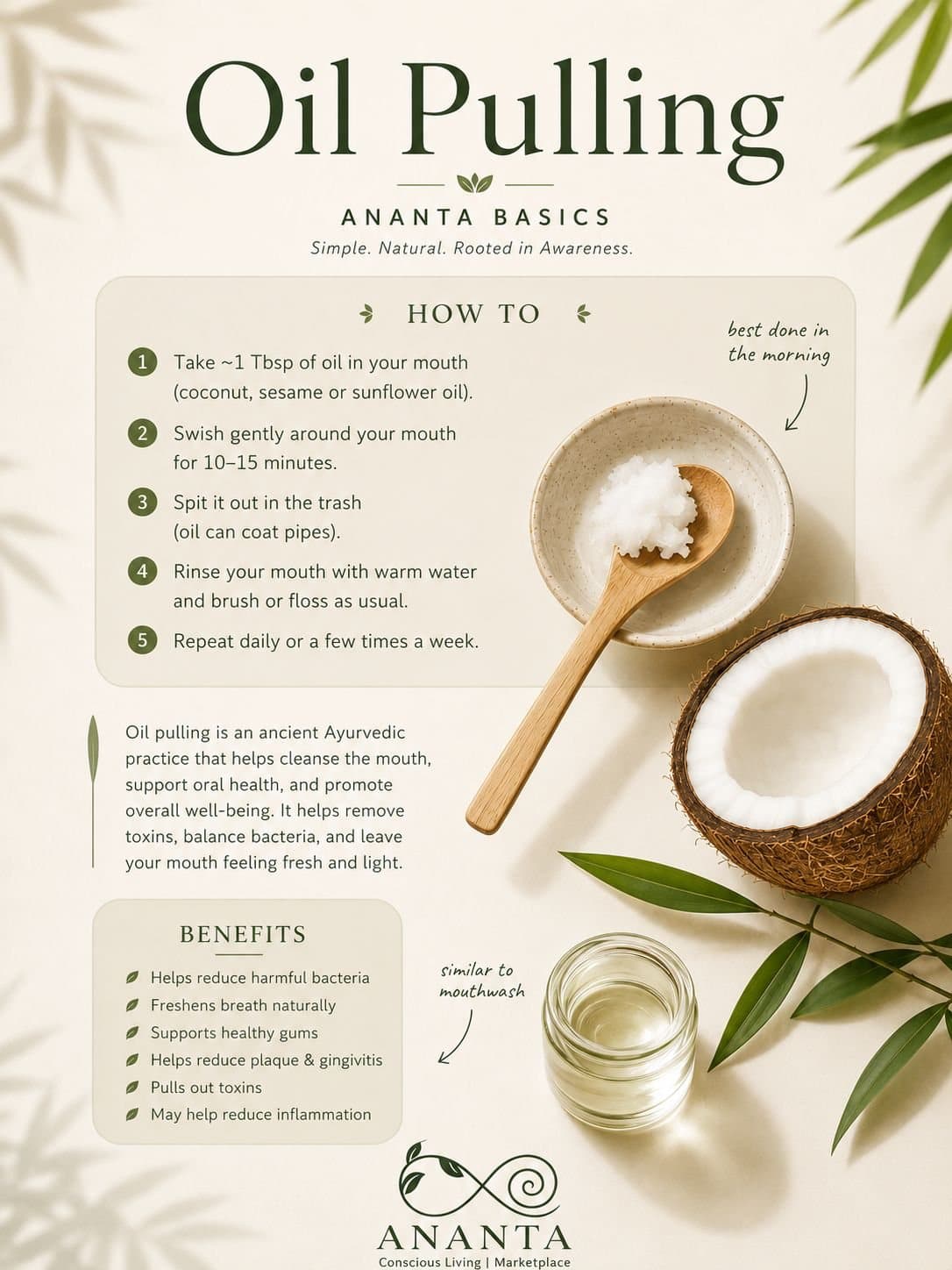
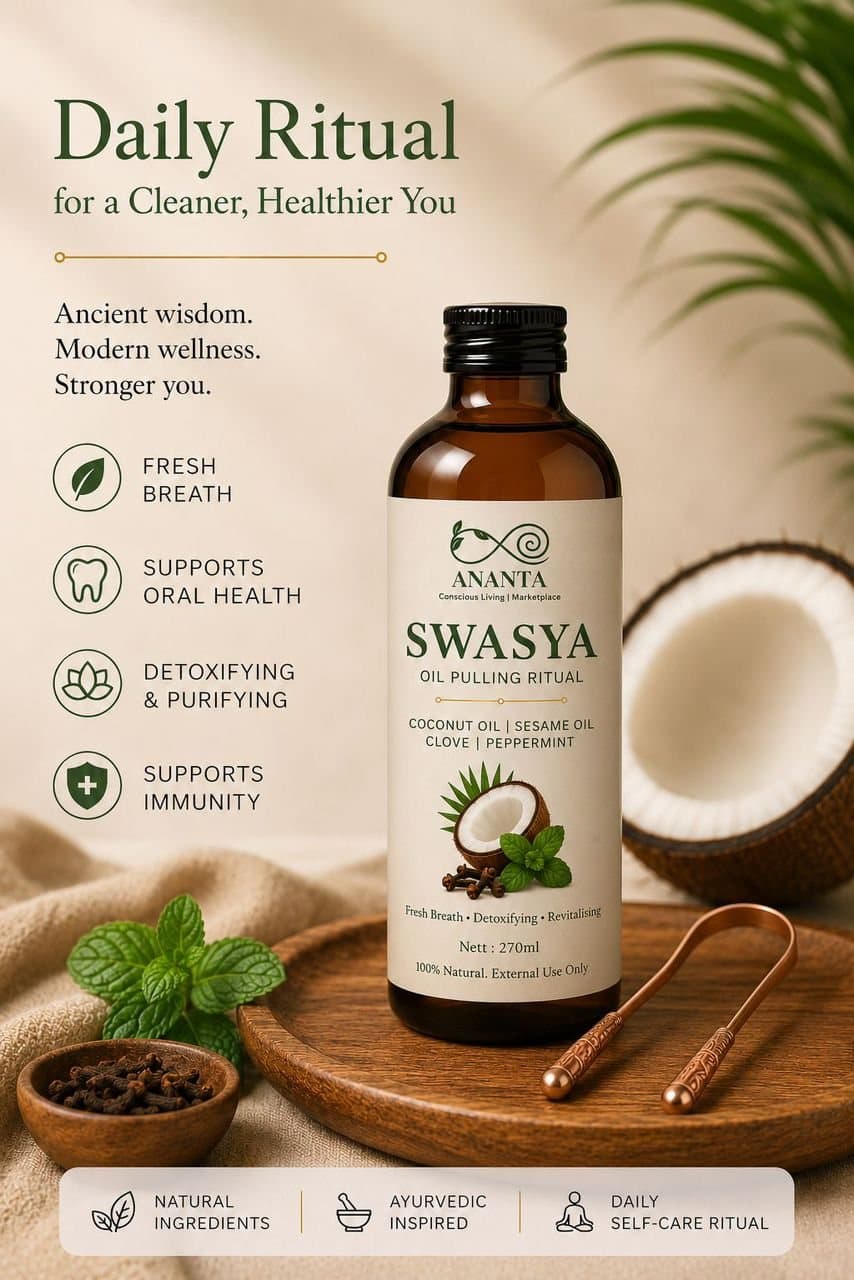
Today, my personal practice is very simple. I brush properly before bed. In the morning, I mostly practise oil pulling followed by gentle gum massage - sometimes with haritaki powder, which has traditionally been used in Ayurvedic practices for oral care and cleansing.
Whenever possible, especially after heavier or greasy meals, I also try to rinse or clean my mouth throughout the day. One thing I've personally become very conscious about is making sure there are no food chunks trapped between the teeth - to me, trapped food sitting there for hours feels like one of the biggest contributors to oral problems over time.
Your mouth should feel fresh and clean, almost like the feeling after scaling.
The Mouth Needs Movement, Touch & Hydration
The mouth is living tissue. It needs movement, circulation, touch, hydration, and awareness.
Many of us today live lifestyles where our mouths remain closed for long hours - desk jobs, long hours on screens, driving, or isolated work with very little movement and interaction. According to this perspective, prolonged stagnation, dryness, and lack of movement in the mouth may gradually allow bacteria to become active.
Gum Massage
One of the simplest practices is gum massage. Imagine your finger as the toothbrush and saliva as the paste. Using clean fingers, gently massage the gums and teeth area. Personally, I feel this helps stimulate circulation and awareness around the gums.
Water Pulling
Another simple practice is what we call “water pulling.” After meals, or throughout the day, simply swish water around the mouth thoroughly and spit it out. This helps remove leftover particles and refresh the mouth naturally. Warm salt water rinses are another traditional practice - simple, yet refreshing.
Air Pulling
Another unusual practice is “air pulling.” Just as we swish water or oil, we consciously move air around inside the mouth while keeping it closed. Especially during long screen-time sessions or periods of inactivity, this helps the mouth feel less stagnant and more refreshed. Whether it's psychological, physical, or energetic, I'm still exploring it myself - but it's something that resonated with me.
Natural Practices I Personally Explore
Over the years, I've explored many traditional and natural oral care practices. Again, I'm not claiming these are cures or replacements for professional care. These are simply practices that personally resonated with me.
Neem Sticks
One traditional practice worth exploring is the use of small neem sticks after meals. In traditional practices, neem has long been used for oral cleansing and gum care. Some people gently chew on the stick to release its naturally bitter essence, while allowing it to sit in the mouth for a short period. Traditionally, neem has been associated with cleansing, freshness, and supporting overall oral hygiene in a more natural way.
Haritaki Powder
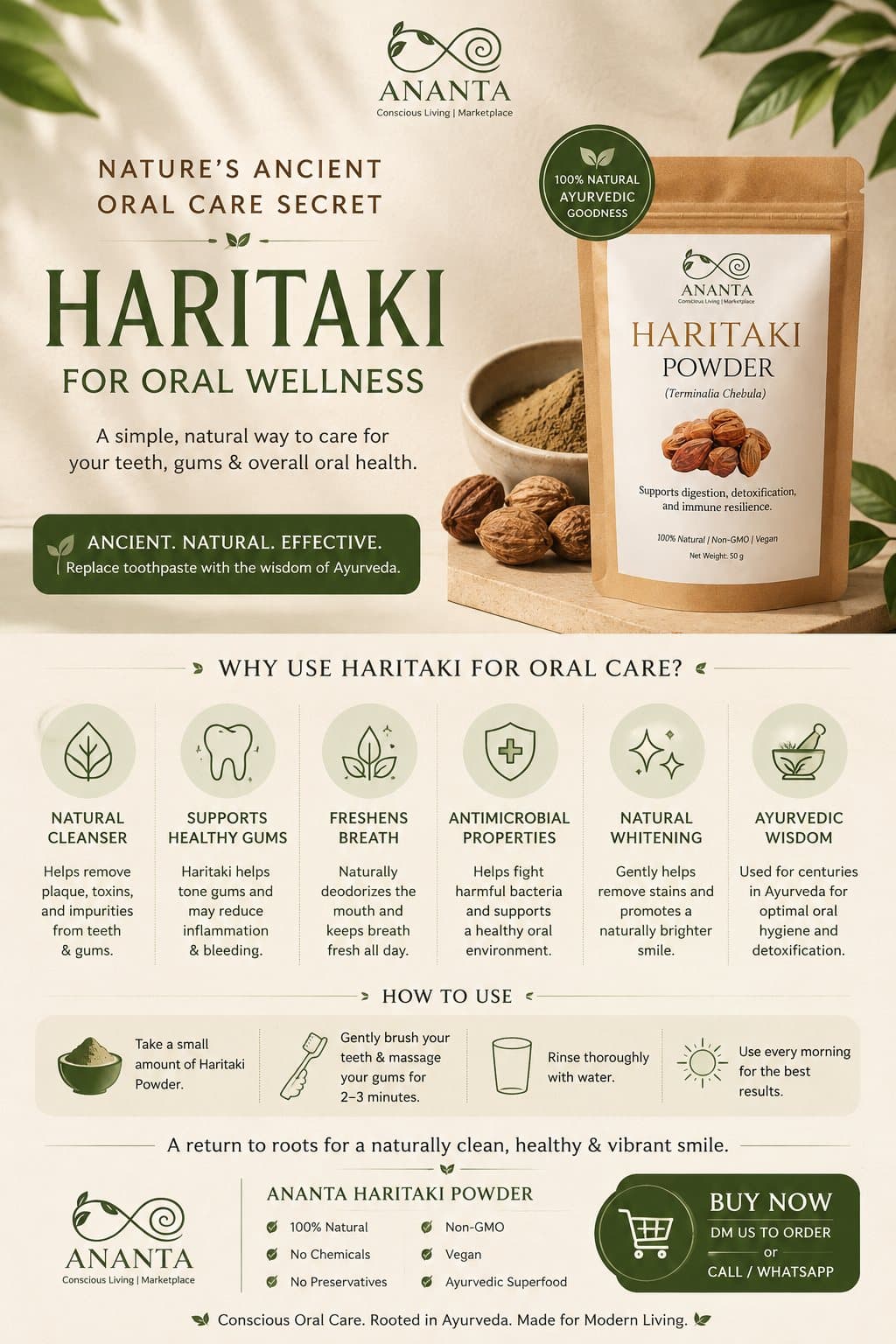
Another natural remedy often explored in traditional oral care practices is haritaki powder. In Ayurvedic healing systems, haritaki has long been associated with cleansing, oral freshness, and supporting gum health. Some people use it for gentle brushing or gum massage as part of a more natural oral care routine.
Personally, I'm drawn to how simple, earthy, and grounding it feels compared to heavily flavoured commercial products. You can even make your own paste with Kadukai (Haritaki) powder.
Castor Oil Practice
Another practice I personally experimented with is placing a small amount of organic castor oil in the mouth for about 1 to 3 minutes without swishing, before spitting it out. I usually explore this more intentionally whenever I experience tooth discomfort or sensitivity - I notice an almost instant feeling of freshness and calmness in the mouth afterwards. If there are no oral discomforts, this can simply be practised occasionally as part of a more mindful oral care routine.
The Fluoride Debate
Another hot topic around oral care is fluoride, especially its presence in toothpaste. This has been debated online for many years, and today we can even see local brands in Malaysia stepping up to produce fluoride-free toothpaste alternatives as awareness around ingredients continues to grow.
Personally, I'm not here to say fluoride is definitely harmful or unnecessary. I'm not certified, nor do I come from a medical background, and I don't believe in fear-based messaging. But like many other topics in health and wellness, I believe it's healthy for us to question, research, observe, and become more aware of what we consume daily.
One thing this entire debate taught me is the importance of reading ingredients - not only in toothpaste, but in all the products we use and consume daily. Many ingredients are written in fine print, and most of us never really question what's inside products we've used for years.
For me, this journey became less about fear and more about conscious choice. If there are simpler, more natural alternatives available, I naturally feel drawn toward exploring them. That's why today I personally choose fluoride-free toothpaste and lean toward herbal and traditional oral care practices whenever possible. Not because I claim to know the absolute truth, but because going back to simpler and more natural living resonates deeply with me. Less is more.
Wisdom Tooth - A Personal Reflection
A few years ago, during a dental visit, I discovered I had a problematic wisdom tooth. At the time I wasn't taking oral care seriously at all, and the dentist immediately suggested removing it. But stubbornly, I decided to try my best to care for it naturally first. For almost four years, every dental visit came with the same advice - and somehow, through better awareness and improved oral care practices, I managed to maintain it for quite a while.
Eventually, one day before my birthday last year, the pain became too intense and I finally decided to remove it. Ironically, the extraction was smooth and I experienced almost zero pain afterwards. When I looked at the tooth after removal, I honestly had to laugh - it looked quite damaged already.
That entire experience taught me something important: be practical.
There's nothing wrong with trying natural practices first, and there's also nothing wrong with seeking professional treatment when truly necessary. Sometimes wisdom tooth discomfort happens in phases - growth periods, inflammation, pressure changes - and with proper care it may settle naturally. But there are moments where intervention becomes necessary too. I'm not against modern medicine or dental treatment. I simply believe we shouldn't forget the body's own intelligence and ability to support healing as well.
Is the Wisdom Tooth Really “Useless”?
One question always stayed in my mind: why is it called a “wisdom” tooth in the first place? Many dentists consider wisdom teeth unnecessary, and I understand that perspective. But personally, I find it difficult to believe the human body creates anything entirely without purpose.
Across different cultures and spiritual traditions, wisdom teeth have often been symbolically associated with maturity, transition, personal growth, and awakening. I've also come across discussions about indirect connections between the wisdom tooth area, nerves around the jaw, and the nervous system - though I'm still exploring and learning about these ideas myself. I can't confidently explain the science behind them yet, and I don't claim them as facts. But I remain curious. And sometimes, curiosity itself is part of the journey.
Self-Healing & Practicality Can Co-Exist
One thing I deeply believe is this: the body has intelligence. Over the years, I've personally witnessed people around me go through incredible healing journeys through lifestyle changes, belief, awareness, discipline, and natural practices. In many ways, I do believe mind over matter is real. But at the same time, practicality is important.
If you're currently struggling with oral issues, my humble suggestion is to first begin with awareness. Improve your daily habits, clean consistently, hydrate properly, massage the gums, reduce stagnation in the mouth, and explore natural support practices that resonate with you. Sometimes even small consistent changes make a big difference over time.
And if the situation becomes critical, painful, or overwhelming - seek professional help. There is absolutely no shame in that. I don't see natural healing and modern medicine as enemies. Both can co-exist, and sometimes they even support each other when approached with balance, awareness, and practicality.
Returning to Simplicity
At the end of the day, this journey made me realise something simple: health is often found in the small daily rituals we ignore.
Awareness. Consistency. Touch. Movement. Hydration. Breath. Simplicity.
Maybe oral care is not only about brushing harder or buying stronger products. Maybe it's also about reconnecting with the body, paying attention to the small signals, and becoming more intentional with how we live each day. For me, this journey was never only about teeth - it became a deeper reflection on lifestyle, habits, awareness, and the relationship we have with our own body.
This article is simply a reflection of what I've personally explored, practised, observed, and what resonated with me along the way. Some ideas may align with you, while others may not - and that's completely okay. Take what serves you. Question what doesn't. And continue exploring your own path with awareness, balance, and curiosity.